
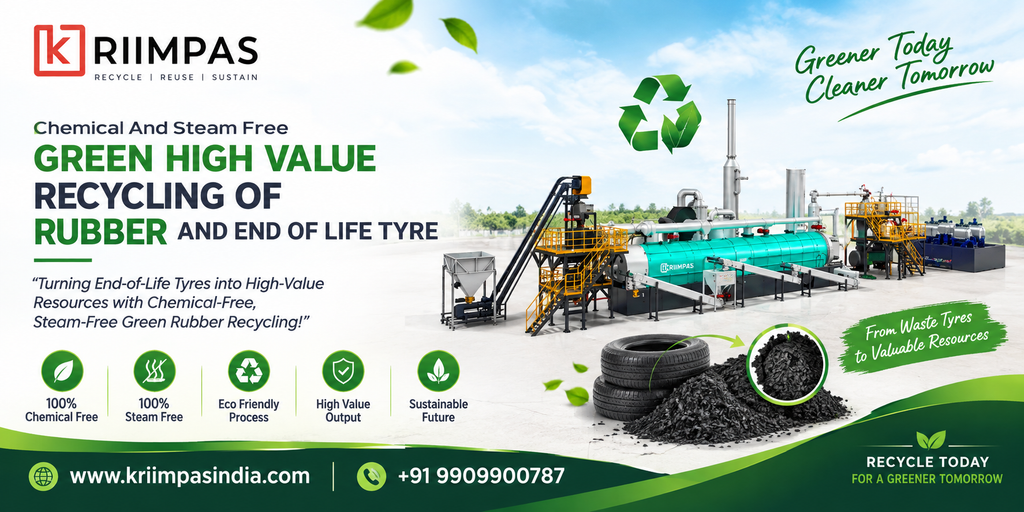
Chemical And Steam Free Green High Value Recycling of Rubber And end of life Tyre
Introduction
Welcome to Kriimpas India Pvt. Ltd., where we offer comprehensive solutions for all your material processing needs. Since 2012, we have been dedicated to providing top-notch machinery and services to our valued customers.
Rubber is an important material used in many industries, including automotive, construction, manufacturing, transportation, and engineering. Tyres, rubber belts, hoses, seals, and other rubber products are essential for daily operations. However, when these products reach the end of their useful life, they can become a major waste management challenge.
Chemical- and steam-free green high-value recycling of rubber and end-of-life tyres offers an innovative approach to managing this waste and recovering valuable materials. Instead of allowing old tyres and rubber products to accumulate in landfills or creating pollution through improper disposal, advanced recycling methods aim to convert waste rubber into useful resources.
Kriimpas India Pvt. Ltd. supports the growing interest in sustainable rubber recycling solutions that can help industries make better use of discarded rubber materials. By focusing on greener recycling approaches, businesses can explore new opportunities to reduce waste, improve resource efficiency, and contribute to a circular economy.
What Is Chemical and Steam-Free Rubber Recycling
Chemical and steam-free rubber recycling refers to recycling approaches designed to recover useful materials from waste rubber without relying on chemical treatment or steam-based processing in the relevant recycling stage.
Traditional rubber waste management methods may involve landfilling, burning, grinding, or other processing techniques. Some recycling technologies also use chemicals, heat, or pressure to modify rubber materials. These processes can involve energy consumption, operating costs, or environmental considerations.
Green recycling approaches aim to recover value from end-of-life tyres and other rubber products while reducing unnecessary processing steps. Depending on the technology used, the recovered materials may be suitable for further industrial applications.
Why Is End-of-Life Tyre Recycling Important
End-of-life tyres are tyres that can no longer be used safely for their original purpose. Every year, large quantities of used tyres are generated by cars, trucks, buses, agricultural vehicles, and industrial equipment.
1. Reduces Waste Accumulation
Discarded tyres require significant storage space. Improperly stored tyres can collect rainwater, creating suitable breeding conditions for mosquitoes. Large tyre stockpiles can also present fire risks. Recycling helps divert these materials from uncontrolled dumping and channels them into productive uses.
2. Supports Resource Recovery
A tyre contains several valuable materials, including rubber, steel, and textile reinforcement. Recycling can separate and recover some of these materials for reuse, depending on the process. Recovered steel can enter metal recycling streams, while rubber can be processed for industrial applications. This approach supports better resource utilisation.
3. Helps Reduce Dependence on Virgin Materials
Manufacturing new products often requires fresh raw materials. When recycled rubber meets the required technical standards, it can replace virgin material in suitable applications. This may help manufacturers improve material efficiency and reduce their dependence on newly sourced resources.
4. Encourages a Circular Economy
A circular economy focuses on keeping materials in use for as long as possible. Instead of following the traditional pattern of producing, using, and discarding, recycling returns recovered resources to the supply chain. Chemical and steam-free rubber recycling approaches can support this model when they produce consistent, useful, and commercially viable recovered materials.
Types of Chemical and Steam-Free Green Rubber Recycling
1. Mechanical Rubber Recycling
Mechanical recycling is one of the most widely used approaches for processing end-of-life tyres without chemical treatment or steam-based processing. It involves physical operations that reduce tyres into smaller pieces and separate useful materials.
- Rubber flooring and playground surfaces
- Road construction and asphalt modification
- Rubber mats and industrial flooring
- Sports surfaces and recreational areas
- Moulded rubber products
2. Ambient-Temperature Tyre Recycling
Ambient-temperature recycling reduces tyres into smaller particles under normal or controlled environmental conditions rather than intentionally cooling the rubber to cryogenic temperatures.
- No steam treatment is inherently required
- No chemical devulcanising agent is necessarily required
- Supports the recovery of rubber, steel, and textile materials
- Can be adapted to different production capacities
- Produces materials for further manufacturing applications
3. High-Value Crumb Rubber Production
Crumb rubber production converts scrap tyres into granules or fine rubber particles that can be used in new products. The process generally involves several stages of size reduction, screening, and separation.
- Rubber tiles and flooring
- Anti-vibration pads
- Industrial mats
- Rubber-modified asphalt
- Selected moulded rubber products
4. Physical Rubber Devulcanisation
Physical devulcanisation attempts to modify or break down these crosslinks using controlled mechanical energy, heat, ultrasound, or combinations of physical methods. Some approaches can be designed without chemical additives or steam, although not every physical devulcanisation technology is completely chemical-free or steam-free.
- Rubber sheets
- Seals and selected gasket products
- Rubber mats
- Moulded rubber components
- Selected automotive and industrial rubber products
5. Mechanical Shear-Based Rubber Recycling
Mechanical shear-based recycling uses controlled forces generated by specialised equipment to process rubber and, in some systems, partially devulcanise it.
- May reduce the need for chemical processing agents
- Can support rubber reuse in selected formulations
- May be integrated with mechanical grinding operations
- Requires careful control of energy input and temperature
- Recovered material must be tested for performance and consistency
Benefits of Chemical- and Steam-Free Green Rubber Recycling
1. Environmentally Friendly Recycling Process
One of the biggest benefits of chemical- and steam-free rubber recycling is its potential to reduce environmental impact. Traditional tyre disposal methods, including landfilling and uncontrolled burning, can waste valuable resources and cause pollution.
- Reduced dependence on landfill disposal.
- Improved recovery of valuable rubber resources.
- Support for responsible waste management practices.
- Promotion of a circular economy through material reuse.
2. High-Value Recovery of Rubber Materials
End-of-life tyres contain valuable materials, including rubber, steel, and textile components. Instead of treating used tyres as unwanted waste, green recycling technology can help recover these resources for further processing.
- Rubber mats and flooring products.
- Selected moulded rubber components.
- Rubber-modified construction materials.
- Industrial rubber products.
- Further rubber compounding and manufacturing.
3. Reduced Dependence on Chemicals
Chemical-free processing can offer operational and environmental advantages when the selected recycling technology genuinely operates without chemical treatment agents.
- Reduced purchasing and handling of chemical agents.
- Lower chemical storage requirements.
- Fewer chemical handling procedures.
- Reduced risk of chemical spills associated with the eliminated agents.
- Simplified process management.
4. No Steam Requirement
Depending on the technology, eliminating steam may reduce the need for boilers, steam distribution systems, and related water treatment infrastructure. It may also reduce water consumption associated specifically with steam generation.
- Less dependence on steam-generation equipment.
- Reduced water demand for steam production.
- Fewer steam-system maintenance requirements.
- Potentially simpler plant installation.
5. Improved Resource Efficiency
Rubber recycling helps recover resources that would otherwise be lost through disposal. End-of-life tyres contain materials that required raw materials, energy, and manufacturing processes to produce in the first place.
- Better utilisation of existing rubber resources.
- Reduced waste sent for disposal.
- Recovery of steel and other separable materials.
- Lower demand for certain virgin raw materials.
- Improved material productivity.
6. Potential Reduction in Operating Costs
Chemical- and steam-free recycling technology may offer cost advantages by reducing the need for certain consumables and process utilities. However, actual savings depend on plant capacity, electricity prices, maintenance, labour, feedstock quality, and product market value.
- Reduced expenditure on chemical agents where they are not required.
- Reduced spending on waste disposal.
- Additional revenue from recovered rubber products.
- Improved use of available waste resources.
7. Support for the Circular Economy
Green tyre recycling supports this objective by converting discarded tyres into resources for new products. Instead of sending end-of-life tyres directly to disposal, businesses can recover and reintroduce suitable materials into manufacturing supply chains.
- Reduce avoidable waste.
- Extend the useful life of rubber resources.
- Encourage recycled-material manufacturing.
- Support more responsible material sourcing.
8. Lower Environmental Footprint Potential
Green rubber recycling can contribute to a lower environmental footprint when the complete process uses resources efficiently and produces marketable recovered materials.
- Electricity consumed per tonne of tyres processed.
- Water used per tonne of output.
- Quantity of chemicals used.
- Rubber recovery rate.
- Steel recovery rate.
- Greenhouse gas emissions across the process.
Why Choose Kriimpas India Pvt. Ltd.
1. Environmentally Friendly Recycling Process
One of the main reasons to choose green rubber recycling is its potential to reduce environmental impact. End-of-life tyres contain rubber, steel, and textile materials that can be recovered and reused. Proper recycling helps divert waste tyres from landfills and reduces the risk of uncontrolled burning and illegal dumping.
A well-designed recycling system can support a cleaner environment by recovering valuable resources and encouraging responsible waste management practices.
2. Chemical-Free Processing Advantages
Chemical-free processing can reduce the need for additional chemical agents during the recycling stage. This may simplify chemical handling, reduce certain waste streams, and support safer material recovery operations.
For businesses, a chemical-free approach can also help reduce chemical storage requirements and the associated handling procedures. However, the exact benefits depend on the process used and whether any chemicals are required in other stages of production.
3. Steam-Free Operation
Steam-free recycling methods can avoid the need for steam generation in processes where conventional systems depend on it. Depending on the equipment design, this may reduce water consumption, boiler requirements, and energy losses associated with steam production.
Businesses should compare the complete energy requirements of different technologies, including electricity consumption, heating, cooling, and auxiliary equipment, before selecting a recycling system.
4. High-Value Material Recovery
End-of-life tyres are not simply waste; they contain materials with potential commercial value. Effective recycling can recover different fractions for reuse in manufacturing and industrial applications.
- Recycled rubber: Used in suitable rubber products, mats, flooring, and selected industrial applications.
- Recovered steel: Sent for further processing and reuse in metal production.
- Textile fractions: Recovered where possible and directed towards suitable reuse or recovery routes.
- Rubber granules and powder: Used in applications such as moulded products, sports surfaces, and other products where their properties meet the required specifications.
The value of recovered materials depends on purity, particle size, contamination levels, market demand, and the quality standards required by buyers.
5. Better Resource Efficiency
Green recycling supports a circular economy by keeping useful materials in circulation for longer. Instead of relying entirely on virgin raw materials, manufacturers can use suitable recycled rubber and other recovered resources.
This approach can help businesses improve resource efficiency, reduce waste disposal needs, and develop more sustainable supply chains.
6. Potential Operating Cost Savings
A suitable chemical-free and steam-free recycling system may reduce certain operating expenses associated with chemicals, steam generation, water use, and waste handling.
However, savings are not automatic. Equipment investment, electricity consumption, labour, maintenance, material transport, and product quality all affect profitability. A detailed cost analysis helps determine whether the technology is commercially suitable for a specific operation.
7. Supports Sustainable Manufacturing
Manufacturers increasingly seek ways to reduce waste and improve the environmental performance of their operations. Recycled rubber can support this objective when it meets the technical requirements of the final application.
By recovering useful materials from discarded tyres, recycling businesses can help manufacturers access alternative raw materials while supporting responsible production practices.
8. Creates Business Opportunities
High-value tyre recycling can create opportunities for entrepreneurs, waste management companies, rubber processors, and industrial manufacturers. Potential revenue streams may include recycled rubber granules, rubber powder, recovered steel, and other saleable fractions.
Before investing, businesses should assess local tyre waste availability, processing capacity, buyer requirements, environmental regulations, and the expected selling prices of recovered materials.
9. Reduces Dependence on Landfill Disposal
Waste tyres can occupy substantial space and create long-term waste management challenges. Recycling provides an alternative route by converting discarded tyres into usable material streams.
Responsible collection, transportation, and processing can help reduce landfill pressure and improve the management of end-of-life rubber products.
10. Encourages Long-Term Sustainability
Choosing a green recycling approach is an investment in more responsible resource management. When supported by efficient technology, proper emissions controls, and reliable markets for recovered materials, tyre recycling can combine environmental benefits with commercial opportunities.
Businesses should evaluate independently verified environmental performance, material recovery rates, energy consumption, and the quality of the finished products before selecting a recycling solution.
How to Select the Right Rubber Recycling Technology
Before investing in a recycling system, businesses should understand their waste streams and production goals. First, identify the quantity and type of rubber waste generated each month. Whole tyres, shredded tyres, industrial rubber scrap, and mixed rubber products may require different processing arrangements. Second, establish the desired output. A business producing rubber powder may need a different system from one seeking reclaimed rubber with specific performance properties.
Third, examine the technology’s environmental performance. Ask for information about energy consumption, emissions, water use, chemicals, steam requirements, and waste generated during operation. Finally, request technical documentation, material samples, performance test results, and a clear estimate of operating costs. These checks help buyers compare technologies on measurable results rather than marketing claims alone.
The Future of Green Rubber Recycling in India
India’s growing automotive, infrastructure, and manufacturing sectors create a continuing need for responsible tyre and rubber waste management. Recycling can help turn discarded materials into useful industrial resources while reducing reliance on disposal.
The future of the industry will depend on efficient equipment, consistent recovered-material quality, suitable end markets, responsible waste handling, and compliance with applicable environmental regulations.
Chemical and steam-free approaches may offer advantages in appropriate applications, but their actual benefits must be demonstrated through technical testing and transparent process data.
For manufacturers, recyclers, and industrial businesses, investing in effective recycling solutions can be an important step towards a more resource-efficient production model.
Kriimpas India Pvt. Ltd. can contribute to this growing conversation by communicating its capabilities clearly and helping potential customers understand the value of its rubber recycling solutions.
Conclusion
Chemical- and steam-free green high-value recycling of rubber and end-of-life tyres represents an important area of innovation in sustainable waste management. By recovering useful materials from discarded tyres and rubber products, recycling can help reduce waste, support resource conservation, and create opportunities for industrial reuse.
The most suitable solution depends on the technology, the quality of the recovered material, operational costs, and the intended application. Businesses should evaluate these factors carefully before choosing a recycling system. Kriimpas India Pvt. Ltd. is a company to consider when exploring opportunities in green rubber recycling. With a focus on responsible resource recovery and high-value material utilisation, businesses can work towards more sustainable rubber waste management practices.
